
Art & Faith: Interview with JMC
Share
It emerged quite organically from the work I was already doing. At the core, my paintings have always been concerned with human interiority—emotion, fracture, endurance, and those moments where hope or redemption surface. As my faith became more central, I began to recognize how closely those concerns aligned with biblical narratives.
Over time, I felt a growing tension between exhibiting work solely within gallery contexts and wanting the images to function in a more contemplative, participatory way. That shift opened space for writing, particularly through the ongoing me Right essays on my site—short reflections on mercy, spiritual conflict in daily life, and the subtle ways meaning asserts itself.
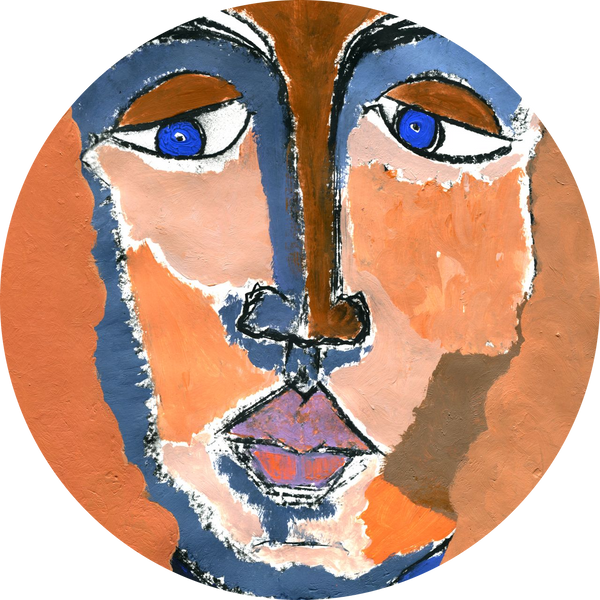
Encounters with Grace developed at that intersection. Beginning with Women of Faith and later expanding to men and sacred places, each volume pairs full-color neo-expressionist portraits—figures such as Abigail, Ruth, Esther, and Mary Magdalene—with Scripture, a brief reflection, and the biblical account itself. The intention is to slow the encounter: to allow viewers to sit with the image and narrative long enough for resonance to emerge.
That contrast is deliberate. Neo-expressionism is direct and unfiltered. The layering, the intensity, even the abrasiveness at times, felt honest to how transformation and grace often enters lived experience.
Much devotional imagery leans toward serenity and resolution, which has its place, but I was interested in something that engages the viewer before interpretation sets in. When someone encounters a portrait of Anna the Prophetess, for example, I want the years of waiting and the weight of devotion to register emotionally before the text is even read. The paintings aren’t meant to illustrate Scripture so much as to sit alongside it—another mode of testimony, inviting sustained attention.
Vulnerability was the most immediate. The paintings already carry a level of exposure, but pairing them with personal reflections on mercy, failure, and redemption deepened that sense considerably. It felt less mediated than a gallery presentation.
There were also practical challenges—learning the mechanics of design, layout, and independent publishing required a different set of skills altogether. What carried me through was a willingness to accept incompleteness, which mirrors the core theme of the series itself. I leaned heavily on prayer, as well as on feedback from trusted voices in the faith-and-art space—including you—you were a huge supporter of this project from the early sketches onward, and your encouragement meant the world. Seeing early readers respond to a specific portrait or narrative—feeling recognized or encouraged—ultimately affirmed the risk.
I’d encourage starting from the work itself, not from an idealized outcome. Begin with the image, the text, the question you’re already carrying. Share it in a small, honest context first. Authenticity tends to generate a more lasting connection than refinement alone.
Community has been essential as well—particularly peers who understand both creative practice and spiritual inquiry. And finally, treating the work as an offering rather than a statement has helped me stay grounded. When the outcome is released, space opens for unexpected forms of grace to enter the process.
At the moment, I’m allowing the existing volumes to circulate and find their readership organically. Alongside that, I’m continuing the me Right essays as a parallel stream—more personal reflections responding to lived spiritual experience. I’m also developing a series of limited-edition prints drawn from the portraits.
The books are available through Amazon and directly via artbyjmc.com, which also functions as an archive for the writing, original works, and prints. I share process material and reflections through Instagram as well. What’s most meaningful, though, is hearing how the work is received—when someone describes an image or story as opening a space for reflection or encounter, that feels like the work doing what it’s meant to do.
About Jason
Jason Matthew Clark is a neo-expressionist visual artist and author whose practice integrates Scripture, ancestral memory, and visionary imagery. With over a decade of experience in the visual arts, his Encounters with Grace series situates painted portraiture within a devotional and contemplative framework, complemented by the ongoing me Right essay series at artbyjmc.com.