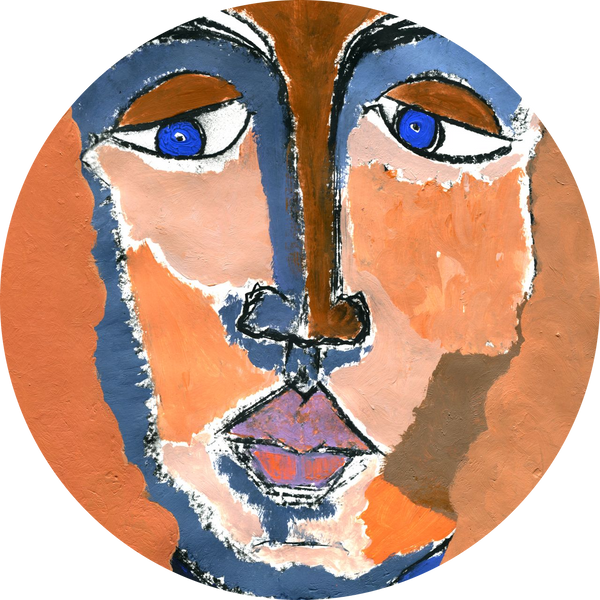

A Descent into Hell: Three Days and the Cross
Share
Seven years ago, I didn’t die.
I was taken apart while still breathing.
What happened wasn’t confusion or sickness or a bad chemical misfire.
It was hell—deliberate, intimate, calibrated.
Something built specifically to dismantle me.
My body locked up in terror so absolute it felt mechanical, like restraints tightening.
My mind was invaded by images so sharp they didn’t feel imagined—they felt installed.
As if a line had been tapped directly into something unspeakable
and the feed had been opened wide.
Nothing was random. Nothing was wasted.
Every second had a purpose, and that purpose was annihilation.
Three calendar days passed.
They meant nothing.
Time stopped behaving like time.
It started quietly, which is how traps work.
I was living at my parents’ house, depressed, hollowed out.
I was dosing myself with DXM without realizing what it was doing—cough syrup stacking in my system, saturating me slowly.
I wasn’t sleeping.
My thoughts were already fraying.
At first it felt like ascent—spiritual electricity, impossible clarity, meaning in everything.
Synchronicities stacked so tightly they felt orchestrated.
I thought I was waking up.
Then the floor vanished.
I looked at my parents and their faces peeled away.
Not metaphorically. Peeled.
Skin stretched wrong over bone.
Eyes too wide.
Teeth jagged.
Something old and rotten looking out through them.
There was no this can’t be real.
That safeguard was gone.
This felt like truth finally revealed—like the mask had been ripped off reality itself.
Satan had the world.
Or maybe he always had.
Every sound mocked me.
Every coincidence locked into place with malicious intent.
Panic didn’t rise—it dropped, like falling down an elevator shaft with no bottom.
I begged for Debbie—the only person I trusted, my second mother, a sister in Christ.
When she arrived, the pressure intensified, like the system had recalibrated.
My thoughts splintered.
Reality lost seams.
I demanded to be institutionalized.
Somewhere to contain the terror.
At the hospital, fear detonated.
I tried to escape.
Two orderlies grabbed me under the arms and threw me through code-locked doors like a slab of meat.
The doors sealed behind me with a final sound that landed in my gut.
Everyone was empty.
Patients. Nurses. Staff.
Walking bodies with nothing inside them.
Eyes like holes punched through flesh.
Automatons designed to keep me there.
One man watched me—long hair, quiet, alert.
He smiled like he already owned me.
He became Satan.
He played chess.
He spoke aloud and inside me.
He referenced things only I knew.
Not guesses—confirmations.
Every “day” began with dissection.
Voices went first—not around me, through me—peeling me open layer by layer.
Hope stripped out.
Then identity.
Then memory.
What followed wasn’t something happening to my body, but something far worse: total sensory immersion.
As if my nervous system had been wired into another place
and forced to experience it at full resolution.
It wasn’t my body being torn apart—
it was my mind being forced to witness it.
What I was shown arrived like transmissions,
snapshots from an infinite future,
each one complete, unavoidable,
installed whole.
I didn’t feel the blades in flesh—
I felt the certainty of them.
The knowledge that this was what awaited me,
endlessly.
Then—reset. Whole again.
Not spared,
just returned
so it could start over.
Eternal rehearsal.
No death.
No escape.
Every attempt to escape was anticipated.
Not just known—but rehearsed.
I would think I could climb—the bookcase as a concrete example of one plan to escape the violence—and Satan would answer aloud and inside me at the same time, while showing me the outcome.
Not hypotheticals.
Full sequences.
Every variation played forward.
Every failure completed.
I was shown myself trying everything—running, hiding, bargaining, complying—each path ending the same way.
Night after night.
At one point, when his presence was strongest, I protested—silently, inside myself.
I don’t deserve this.
The response came immediately.
Flat. Unmoved.
Almost bored.
Who cares.
There was no rage in it.
No argument.
No need to justify anything.
What terrified me most was the quality of it—
not hatred, but indifference.
As if the entire system beneath the experience didn’t operate on morality at all.
Only execution.
Even when I tried to help people—talking gently, comforting them, reaching for anything human—I was told what would follow.
That none of it mattered.
That they would still come for me.
That I would still be tortured, raped, destroyed—reset—and made to endure it again.
What was most horrifying was what it did to my instincts.
I felt myself searching for the least cruel among them.
Trying to befriend certain ones.
Attaching myself to fragments of mercy that didn’t exist.
A desperate, human attempt to survive by proximity—
knowing fully it would fail,
and being shown, in advance, how it would fail.
The ward became the entire universe.
There was no before. No after.
Through the window, normal life continued—sunlight, cars, people—which was the cruelest part.
Proof that I had been cut out of creation and sealed somewhere beneath it.
Three days meant nothing.
Time looped.
Each minute lasted forever.
Then the doctor entered—wearing a hideous 70s plaid sportcoat—and terror peaked.
I collapsed to the floor, sobbing, groveling, clawing at the ground:
“I’m in hell. Please—help me.”
He offered no comfort.
He filled out paperwork.
He told me I couldn’t leave.
That was the pinnacle—the highest point of fear.
The crack didn’t open all at once.
After that, something began to shift.
I noticed it first while interacting with a staff member.
Something subtle—but unmistakable.
Faces softened gradually.
Eyes filled back in over time.
It was as if people were coming back to life.
Humanity leaked slowly into the room.
And through all of it—somehow—I helped people.
I pushed wheelchairs. I spoke gently. I comforted others while expecting my own destruction at any moment.
I still don’t understand how that happened.
I only recognize it now: Christ on the cross—being destroyed, yet still loving.
I had been baptized shortly before.
I believed in God, but Jesus was distant—abstract.
Was I saved? The seed was there.
This was discipline—terrifying, refining correction.
For whom the Lord loves, He chastens.
Satan was allowed to sift me, but not to keep me.
Three days. Long enough to taste hell.
Long enough to fear God.
And God, in His mercy, let me endure it here—
so I would never have to there.
Coming out of the psych ward’s cosmic, soul-shattering fire—where I still reached for others while tasting something of Christ’s suffering on the cross—did not bring peace.
It brought exposure.
The first collapse was otherworldly: orchestrated spiritual darkness, time stretched into eternity, a full preview of hell that God used to drive me toward Jesus.
The second was stripped of spectacle.
No demons. No visions. No eternity.
Just confusion, residue, and my own unguarded humanity.
I was still vulnerable.
Still exposed.
Still listening too closely to internal voices that hadn’t fully gone silent—voices that reframed care as urgency, obedience as compulsion.
My instinct to respond, to help, to do what felt necessary, crossed a boundary I should not have crossed.
I own that.
What followed didn’t feel like punishment so much as exposure.
After surviving something that felt like literal damnation while clinging to compassion, I was forced to look at myself without the cover of cosmic horror.
And it returned—less like fire, more like shadow—testing what compassion could endure when the world misread it.
There were no signs. No voices explaining themselves. No narrative to hide inside.
Only the slow, grinding weight of choices—and the need for grace.
That truth cut deeper than the visions ever did.
And it, too,
became part of the refining.
Author's Note: This post recounts a personal, intense spiritual and psychological experience. It contains descriptions of trauma, mental torment, and disturbing visions. It is intended for reflection and understanding, not for instruction or replication. Reader discretion is advised.